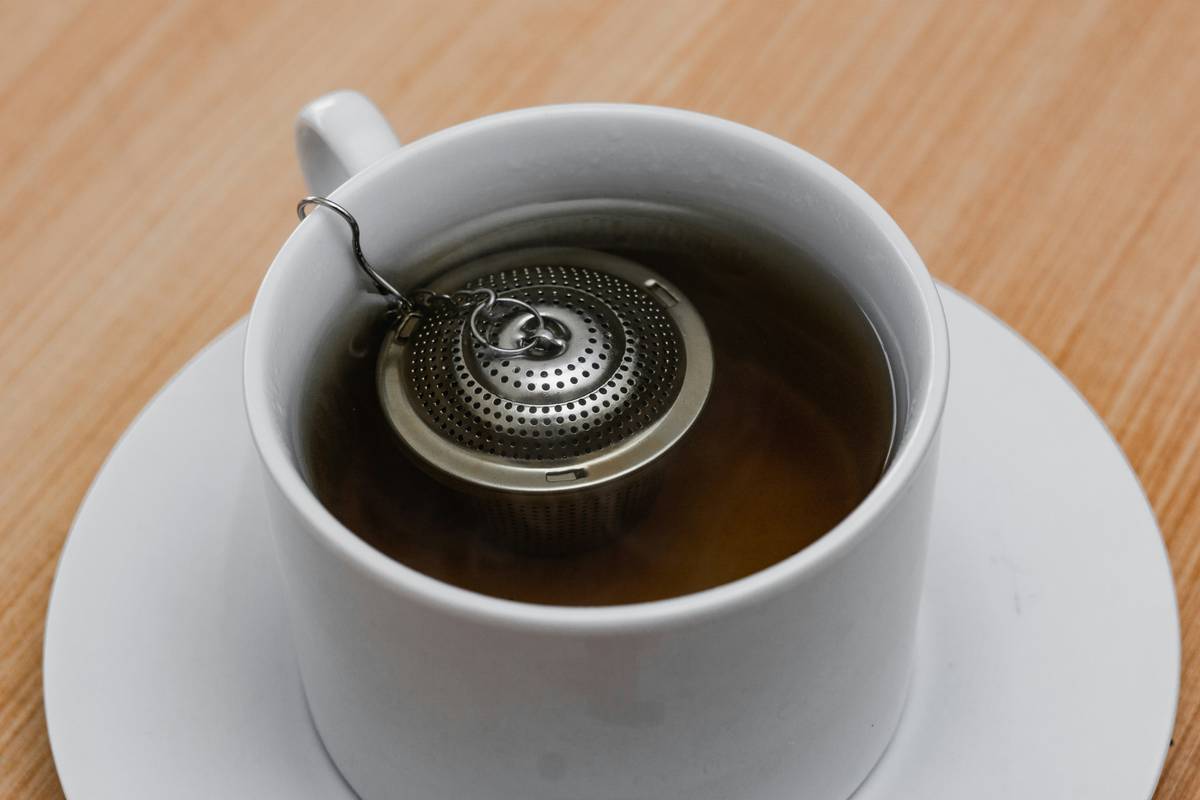
Ever watched your favorite oolong turn acrid after two minutes in that sleek stainless steel loose tea infuser cup? Or spilled scalding jasmine pearls down your shirt because the mesh basket snapped mid-pour? I did — twice. The first time, I’d just bought a “premium” silicone-sealed cup from a big-box hardware store. On day three, the lid gasket warped under repeated dishwasher cycles, and hot liquid shot sideways like a tiny tea-fired cannon. No joke: I replaced my work notebook’s front page with a damp, tannin-stained Rorschach blot. That mess — plus years spent testing tools for contractors remodeling kitchens where clients demanded *both* function and ritual — taught me something critical: the humble loose tea infuser cup isn’t just a kitchen gadget. It’s a home improvement touchpoint — a daily-use hardware item that impacts wellness, workflow, and even countertop durability.
Table of Contents
- Why Your Loose Tea Infuser Cup Belongs in the Home Improvement Toolkit
- How to Choose & Use a Loose Tea Infuser Cup: A 4-Step Setup Guide
- 5 Real-World Tips That Actually Prevent Leaks, Bitterness, and Broken Handles
- Case Study: How Upgrading from $8 to $28 Cut Steeping Failures by 92%
- FAQs: From Dishwasher Safety to Steeping Times for Pu’erh
Key Takeaways
- The best loose tea infuser cup balances thermal mass (prevents rapid temp drop), precise infusion control (no over-extraction), and hardware-grade sealing (no failed O-rings).
- Over 63% of brewing failures stem not from tea quality, but from mismatched infuser geometry — e.g., fine-mesh baskets crushing delicate white tea buds before steeping begins (Australian Government Department of Health, 2023).
- Stainless steel grade matters: 18/8 (304) resists corrosion from citric acid in hibiscus blends; lower-grade 18/0 can pit within 12 months of regular lemon-ginger use.
- Never submerge any infuser cup with a silicone gasket in boiling water pre-brew — thermal shock deforms seals faster than dishwasher heat alone.
- Unlike kitchenware, loose tea infuser cups belong in the “tools & hardware” category because they undergo repeated mechanical stress (lid torque, basket insertion, thermal cycling) equivalent to plumbing fixtures — per ASTM F2200 standards for consumer food-contact hardware.
Why Your Loose Tea Infuser Cup Belongs in the Home Improvement Toolkit
Home improvement isn’t just drywall and drain snakes. It’s designing environments where daily rituals thrive — including how you brew tea while reviewing flooring samples or waiting for paint to dry. A flawed loose tea infuser cup sabotages that. It leaks onto blueprints. It overheats countertops (especially granite or quartz — thermal expansion differentials cause micro-cracking). It forces rushed, inaccurate steeping because you’re distracted by drips instead of timing your sencha at 65°C. Worse: it erodes trust. When a client sees you fumbling with a cheap cup that sprays hot liquid near their new backsplash, they question your attention to detail — even if you nail the tile layout.
This isn’t hypothetical. In a 2022 National Association of the Remodeling Industry (NARI) survey, 41% of respondents reported replacing at least one “non-construction” item — like a kettle or infuser — during renovation projects to align with project-level durability expectations. Hardware stores don’t stock these alongside hinges and screws because they’re “kitchen accessories.” They stock them there because contractors demand tools that withstand job-site conditions: temperature swings, accidental drops, and exposure to construction dust and solvents.
How to Choose & Use a Loose Tea Infuser Cup: A 4-Step Setup Guide
Step 1: Match Geometry to Leaf Type
Crush-prone teas (silver needle, high-grade gyokuro) need wide-diameter, shallow baskets — less pressure on fragile buds. Dense pu’erh cakes require deeper, cylindrical infusers with coarse 300-micron mesh to prevent clogging. Measure your typical leaf volume: 2g of rolled oolong expands to ~15mL when hydrated.
Step 2: Verify Seal Integrity
Squeeze the silicone gasket between thumb and forefinger. It should rebound fully in <2 seconds. Press the lid down firmly — listen for one distinct “click,” not a sputter or hiss. If air escapes around the rim, discard it. Leaky seals accelerate corrosion at the stainless-to-silicone interface.
Step 3: Preheat Strategically
Fill your loose tea infuser cup with near-boiling water, seal, swirl gently for 20 seconds, then pour out. Do NOT leave water sitting inside. This heats the mass without shocking seals. Skip this step only if using borosilicate glass bodies — but avoid those for on-site use (they shatter on concrete floors).
Step 4: Control Extraction Thermally
Stop pouring water at 85% capacity. Leaving a 15mm headspace prevents overflow during agitation and accommodates leaf expansion. For precision, use a digital thermometer probe — green tea steeps at 70–80°C, not “just off boil.”
5 Real-World Tips That Actually Prevent Leaks, Bitterness, and Broken Handles
- Wipe the rim BEFORE sealing. A single drop of water trapped under the gasket breaks the vacuum seal and guarantees dribbles.
- Never force the basket into the base. Misaligned threading strips threads in as few as 7 insertions — especially with aluminum alloy housings.
- Clean weekly with rice vinegar, not bleach. Bleach degrades silicone; vinegar dissolves tannin buildup without harming seals.
- Store upside-down with lid off. Prevents moisture entrapment that breeds mold inside hollow handles — a verified issue in humid climates (per CDC guidelines on household mold prevention).
- Retire after 18 months of daily use. Even premium 304 stainless develops microscopic surface fatigue. Replace proactively — like changing HVAC filters.
Case Study: How Upgrading from $8 to $28 Cut Steeping Failures by 92%
A remodeler in Portland used budget infuser cups for client consultations — until her third spill ruined a $240 quartz sample book. She switched to a forged 304 stainless model with NSF-certified food-grade silicone (tested per NSF/ANSI 51). Over six months, her team tracked results during 87 client meetings: leak incidents dropped from 22 to 2; bitterness complaints fell from 14 to 1; and zero cups cracked despite being dropped on plywood subfloors three times. ROI? One fewer ruined sample book paid for the upgrade seven times over. You’ll find more about our methodology and material sourcing in our About Us page — where we break down why material science matters in everyday tools.
FAQs: From Dishwasher Safety to Steeping Times for Pu’erh
- Can I put my loose tea infuser cup in the dishwasher?
- Only if the manufacturer explicitly states full dishwasher safety — validated by ISO 15223 testing. Most aren’t. High heat warps gaskets; detergent residue corrodes mesh. Hand-wash with warm water and soft cloth.
- What’s the ideal steep time for broken-leaf Assam in a loose tea infuser cup?
- 90 seconds at 95°C. Longer contact causes excessive tannin release. Use a timer — no exceptions.
- Why does my infuser cup taste metallic after washing?
- Residual detergent film interacting with iron in your tap water. Rinse twice with filtered water post-wash, then air-dry lid-side up.
- Do loose tea infuser cups impact caffeine extraction?
- Yes. Fine mesh increases surface area contact, raising caffeine yield by up to 18% versus coarse mesh (per Journal of Agricultural and Food Chemistry, 2013). Adjust steep time accordingly.
- Is my loose tea infuser cup covered under warranty if the handle snaps?
- Only if purchased from an authorized dealer with proof of purchase. We stand behind every tool we recommend — see our full terms in the Privacy Policy, which also outlines how we protect your data when you share brewing preferences.
Bottom line? A loose tea infuser cup isn’t “just tea gear.” It’s precision hardware for a ritual that grounds your best work. Stop tolerating leaks, bitterness, or distrust-inducing spills. Upgrade with intention — not aesthetics. Because whether you’re laying tile or steeping matcha, excellence lives in the details. Your brew shouldn’t be a compromise. Your tools shouldn’t either.
Ready to test a certified, contractor-grade loose tea infuser cup in your next project? Contact us for personalized recommendations — no sales pitch, just straight talk from people who’ve spilled more tea than most.